Bongeunsa has long drawn visitors seeking blessings for everything from acceptance to their dream school to the joy of having a child or receiving a long-awaited raise.
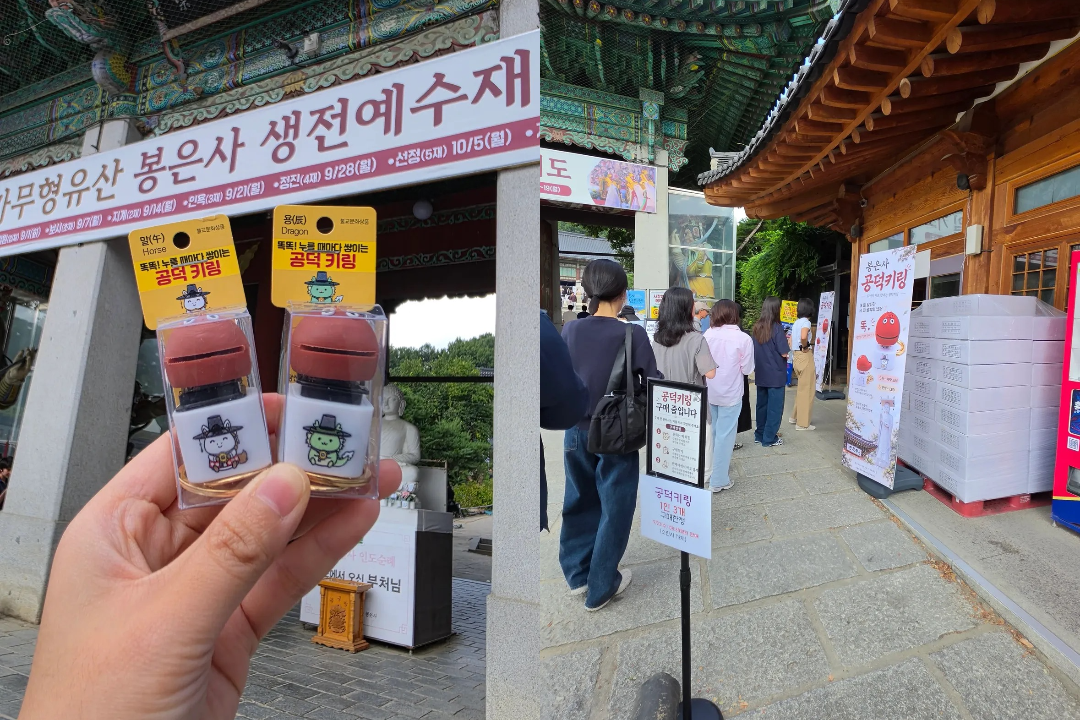
Now, the 1,232-year-old temple is attracting a new kind of wish-maker, eager to get their hands on one of its latest offerings: a moktak fidget clicker.
A moktak is a wooden percussion instrument used in Buddhist rituals, its rhythmic sound associated with mindfulness and the clearing of worldly distractions. The temple’s miniature versions feature a small, rounded moktak-shaped button that produces a familiar wooden clack with every press.
A playful belief has helped fuel the hype: clicking the miniature moktak is said to bring Buddhist merit. Since the clickers went on sale, stocks have repeatedly sold out, with visitors lining up whenever new batches become available.
“I’ve been trying to buy one but couldn’t get my hands on it because they sold out,” said Park Ji-young, a 45-year-old office worker in Seoul. “I believe that clicking would bring peace of mind.”
The temple's fidget clickers come in a range of designs and sounds, each offering a touch of Buddhist-inspired charm. Riding the popularity, Bongeunsa has also announced plans to release versions featuring the 12 zodiac animals.
The clickers are not the only temple souvenirs drawing visitors. Wish bracelets and Buddhist prayer beads have also become popular purchases, adding to Bongeunsa’s appeal as a place to seek blessings — and take home a little reminder of them.
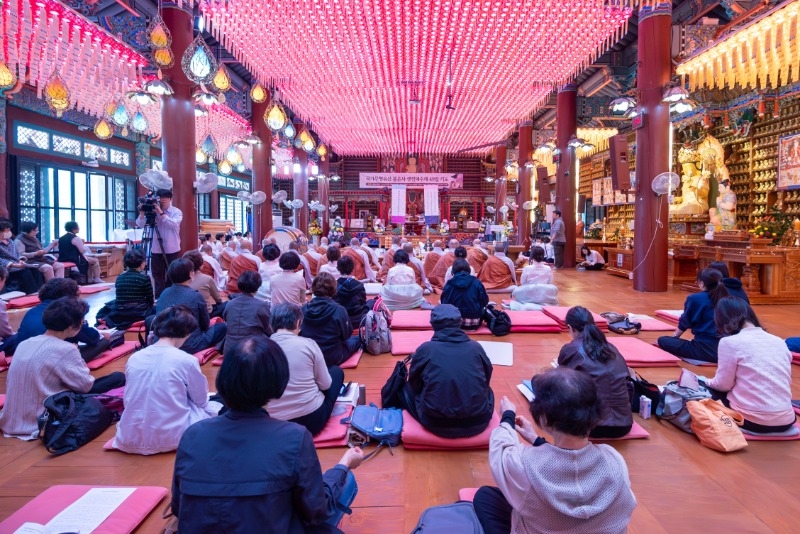
Bongeunsa is one of Korea’s most prominent historic Buddhist temples, known as a place where visitors pray for their wishes to come true. Lee Jae-yong, executive chairman of Samsung Electronics, has been spotted visiting the temple on several occasions with his mother, Hong Ra-hee, honorary director of the Leeum Museum of Art.
At the entrance stands the statue of the Laughing Buddha, whose belly, when rubbed, is thought to bring good luck with money. Inside the main hall, known as Daeungjeon, visitors can perform "sambae," a ritual of three prostrations for praying.
Outside the hall is the Mireuk Daebul Square, where visitors walk three laps in a practice associated with the three jewels of Buddhism: the Buddha, the enlightened one; the Dharma, the teaching; and the Sangha, the monastic community.
Near the temple's three-story stone pagoda, visitors can offer prayers while burning free incense, or buy a prayer candle to light.
Bongeunsa also offers visitors a chance to experience gongyang, the traditional Buddhist practice of mindful eating. At the temple's kitchen, visitors can try the plant-based meals traditionally eaten by Buddhist monks.
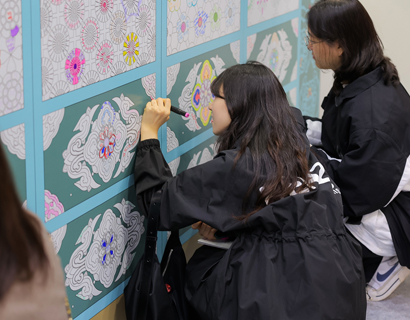
The growing interest in Bongeunsa reflects a broader trend in Korea, where Buddhist culture has found a new audience through merchandise and events.
The annual Seoul International Buddhism Expo has helped drive the shift, drawing attention online for its playful merchandise and unconventional presentations of Buddhist culture. Past events have featured monks DJing to a mix of K-pop and moktak sounds.
Now, many daily Buddhist staples are accessible year-round, offering people novel ways to engage with its longstanding traditions.
mjcha@heraldcorp.com